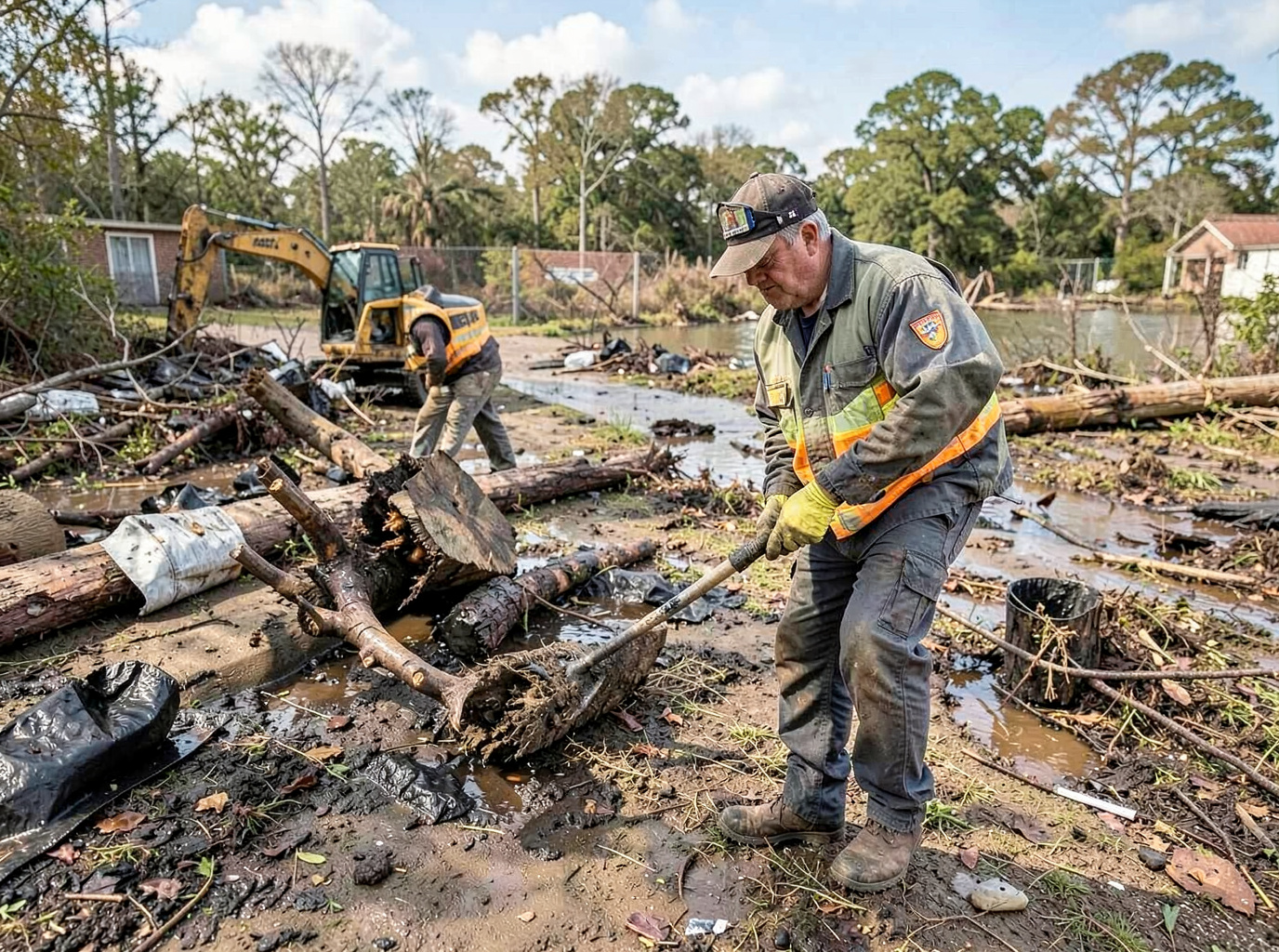
Tallahassee's humid subtropical climate brings frequent summer thunderstorms that overwhelm drainage in older neighborhoods like Downtown and College Town. Many homes built before 1980 have crawlspaces or slab foundations that trap water after heavy rain, allowing moisture to migrate into framing and subfloors. Technicians must pull baseboards early and use moisture meters on brick and plaster walls common in Midtown to locate hidden saturation before mold colonies form within 48 hours.
Southwood and Killearn Estates properties often sit on clay-heavy soils that hold water longer after storms, extending drying times compared to sandier areas near the Florida State Capitol. When floodwater enters from overflowing retention ponds or backed-up storm drains, crews separate salvageable contents quickly because paper goods and textiles absorb humidity rapidly in Leon County's mild winters. Industrial air movers and low-grain dehumidifiers run continuously for several days, with daily readings logged to confirm moisture levels drop below 12 percent before any reconstruction begins.
Edge cases appear near Doak Campbell Stadium and Florida State University where older student housing shares walls, allowing water to travel between units. Sewage-tainted floodwater from municipal lines requires full containment and disposal protocols that differ from clean rainwater jobs. Crews document every step with photos and moisture maps so homeowners in Valdosta or Panama City commuters can coordinate insurance claims without delays.
Technician insight
In Tallahassee the thing that catches most people out with Flood Damage Cleanup is how fast humidity re-soaks drywall after a summer storm once the equipment leaves, especially in older Midtown homes where original plaster meets newer additions and creates cold joints that trap moisture.
Killearn Estates Crawlspace Flood
Heavy overnight rain pushed water through the foundation vents of a 1990s home. Crews found six inches of standing water over clay soil and saturated floor joists. Extraction and three days of targeted drying brought moisture readings below 10 percent before any mold appeared.
Flood Damage Cleanup Services We Offer
✓Emergency Water Extraction
Removes standing floodwater from slabs, crawlspaces, and carpets using truck-mounted pumps sized for Tallahassee storm volumes.
✓Structural Drying and Dehumidification
Places commercial drying equipment in affected rooms and monitors daily moisture readings until materials reach safe levels.
✓Contaminated Water Cleanup
Handles Category 3 floodwater from sewage backups or storm drains with full PPE, containment, and proper disposal.
✓Crawlspace Flood Recovery
Extracts water from under homes in Midtown and Southwood, treats soil moisture, and installs vapor barriers to prevent recurrence.
✓Contents Drying and Restoration
Moves furniture, documents, and textiles to controlled drying chambers so items from Killearn Estates homes can be saved.
Flood Damage Cleanup Cost in Florida
| Service | Typical Range | What Affects It |
|---|---|---|
| Initial Assessment And Moisture Mapping | Free | Includes written report for insurance |
| Water Extraction Per Room | $350–$700 | Varies with carpet vs. hard surface and water depth |
| Full Home Drying Package | $1,200–$2,800 | Covers equipment, monitoring, and disposal for 3–5 days |
| Crawlspace Flood Extraction | $800–$1,600 | Includes soil treatment and vapor barrier reset |
Ranges are typical for Florida and confirmed with an exact written quote before any work starts.
How it works
- 1
On-Site Assessment
Technician inspects all affected rooms, measures moisture in walls and floors, and identifies water source and category.
- 2
Water Removal
Pumps and extractors clear standing water from floors, carpets, and crawlspaces before secondary damage begins.
- 3
Drying And Monitoring
Air movers and dehumidifiers run while daily meter readings track progress until materials test dry.
- 4
Final Sanitation
Antimicrobial treatment applied where needed and a written drying report prepared for the homeowner.
Pricing
Pricing depends on water volume, affected square footage, and whether contamination is present.