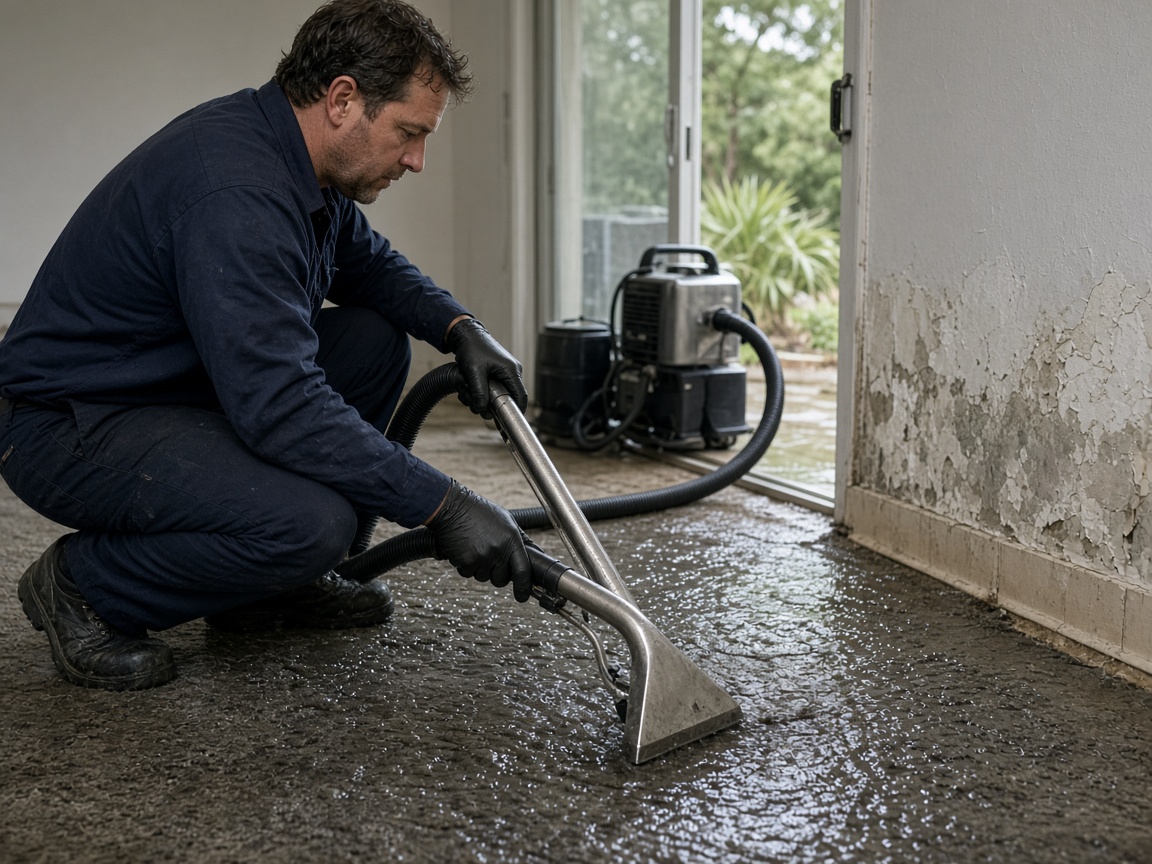
Tallahassee's humid subtropical climate keeps relative humidity high most of the year, so standing water in a College Town rental or Midtown bungalow can turn into active mold growth within 48 hours. Older wood-frame houses near the Florida State Capitol often have plaster-over-lath walls and limited crawlspace access, which traps moisture against joists and forces techs to remove baseboards and drill vent holes rather than relying on surface drying alone.
Southwood and Killearn Estates subdivisions sit on sandy soils with a relatively high water table, so slab leaks or heavy summer rain can push water under tile and into the subfloor without obvious puddles on the surface. Crews here routinely use moisture meters on both sides of interior walls and under cabinets because the mild winters do not provide enough dry air to finish the job naturally.
Homes closer to Doak Campbell Stadium and Florida State University frequently have converted apartments with shared plumbing stacks, so a second-floor leak can travel down multiple units before it surfaces. Restoration plans must account for common walls and limited exterior access when placing drying equipment without disturbing student tenants or historic trim details.
Technician insight
In Tallahassee the thing that catches most people out with water damage restoration is how quickly the humidity re-wets surfaces in older plaster walls around Downtown and College Town. Homeowners try to air-dry with fans after a small leak, but the sandy soil and high water table keep feeding moisture back into the slab for days. Without meters and proper dehumidification the job restarts two weeks later.
Midtown Slab Leak
A kitchen leak in a 1960s Midtown bungalow had traveled under the tile and into the subfloor. Meters showed elevated moisture across the slab and into adjacent plaster walls. Extraction and targeted drying equipment ran for four days until readings normalized, then affected sections of flooring and baseboards were replaced.
Water Damage Restoration Services We Offer
✓Emergency Water Extraction
Removes standing water from slabs, carpets and crawlspaces in Downtown and Midtown properties before humidity drives secondary damage.
✓Structural Drying and Dehumidification
Uses commercial air movers and dehumidifiers sized for Leon County humidity to dry wall cavities and subfloors in Southwood and Killearn Estates homes.
✓Slab Leak Detection and Drying
Locates and dries moisture trapped under tile or hardwood in older Tallahassee houses where high water tables push leaks outward from the foundation.
✓Content and Document Restoration
Cleans and dries furniture, rugs and paperwork from College Town rentals and university-area offices after appliance or roof leaks.
✓Sewage and Category 3 Cleanup
Handles contaminated water from backed-up lines common in older Midtown and Downtown plumbing systems with proper containment and disposal.
Water Damage Restoration Cost in Florida
| Service | Typical Range | What Affects It |
|---|---|---|
| Initial Assessment | Free | On-site inspection for all Leon County jobs |
| Water Extraction | $400–$1,200 | Depends on volume and number of rooms |
| Drying Equipment Rental | $150–$350 per day | Based on square footage and humidity load |
| Drywall and Flooring Removal | $300–$900 | Varies by material type and access in older homes |
Ranges are typical for Florida and confirmed with an exact written quote before any work starts.
How it works
- 1
On-Site Assessment
Technician inspects affected rooms, measures moisture in walls and floors, and notes construction details specific to the neighborhood.
- 2
Water Removal
Extraction equipment pulls standing water from slabs, carpets and cavities while protecting unaffected areas.
- 3
Drying and Monitoring
Air movers and dehumidifiers run until meters read within normal range for Tallahassee humidity levels, with daily checks.
- 4
Restoration and Cleanup
Replace damaged drywall or flooring, sanitize surfaces, and return the space to pre-loss condition.
Pricing
Upfront quotes after inspection; price varies by water volume, access, and materials affected.