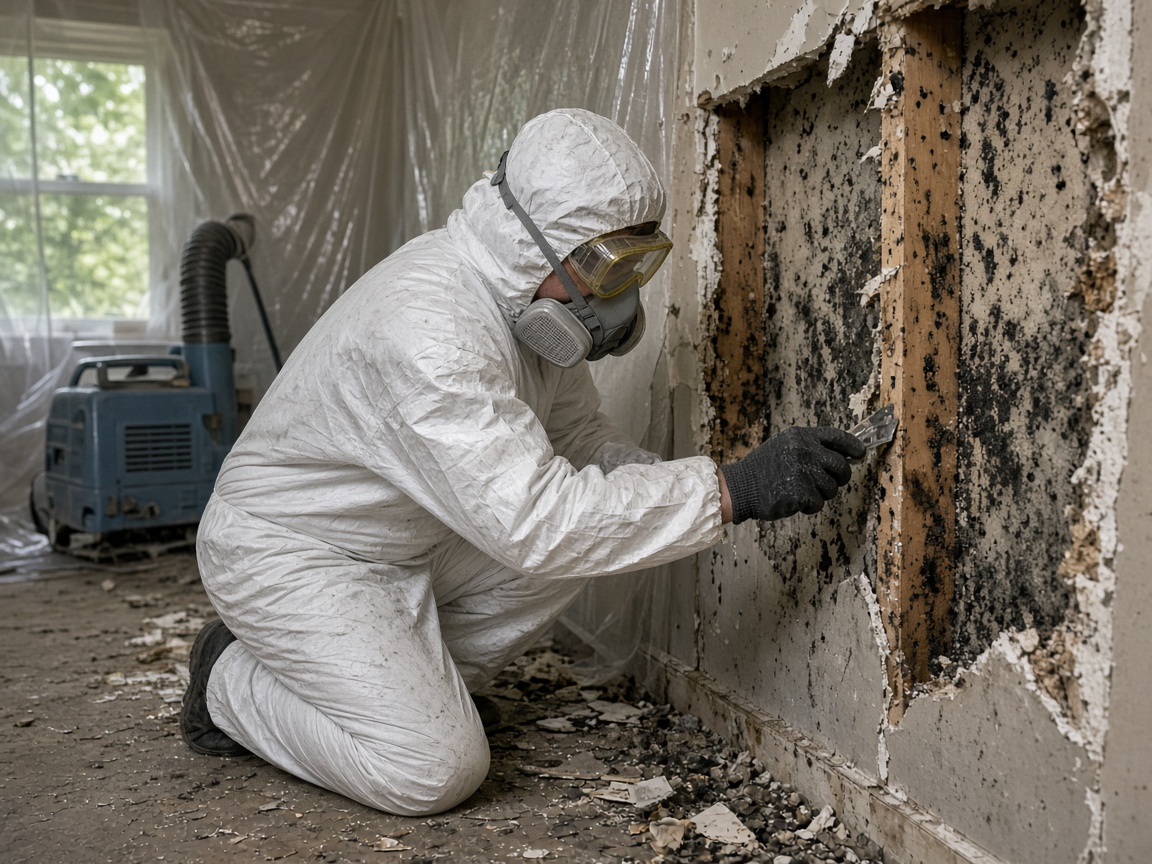
Tallahassee's humid subtropical weather with hot summers creates persistent moisture problems in homes built before modern vapor barriers became standard. Older housing stock in Midtown and around the Florida State Capitol often features crawl spaces and attics that trap humidity, allowing mold to colonize insulation and framing after even minor roof leaks or AC condensation. Leon County properties near Doak Campbell Stadium and College Town see additional risks from heavy summer rains that overwhelm older gutters and grading.
After water intrusion, porous materials like drywall and carpet padding in Southwood and Killearn Estates homes must be removed rather than dried in place because spores embed deeply in the humid environment. We use negative air machines and antimicrobial treatments on remaining surfaces while monitoring moisture levels in wall cavities to prevent regrowth during mild winters when windows stay closed. Properties near St. Marks National Wildlife Refuge face extra challenges from organic debris carried in by storms that feeds mold on exterior walls.
Edge cases include HVAC systems in Florida State University area rentals where mold travels through ducts after condensate pan overflows. We isolate affected zones, remove contaminated insulation, and apply sealants rated for high-humidity conditions before reinstalling. Homeowners in Downtown often discover hidden growth behind tile in bathrooms where original plumbing lacks proper venting, requiring targeted demolition that preserves historic finishes when possible.
Technician insight
In Tallahassee, the thing that catches most people out with Mold Remediation is how quickly spores take hold in crawl spaces of pre-1980s homes in Midtown once summer humidity combines with a small plumbing drip that homeowners ignore during mild winters.
Hidden Growth After AC Leak in Southwood
A homeowner noticed musty odors near the air handler in a Southwood residence. Inspection revealed mold behind drywall from long-term condensate overflow. We contained the room, removed affected sections, treated the cavity, and dried the space over three days. The system was restored without recurrence during the following humid season.
Mold Remediation Services We Offer
✓Attic Mold Remediation
Removes mold from attics in Killearn Estates homes where poor ventilation and summer heat allow spores to spread through insulation after roof leaks.
✓Crawl Space Mold Treatment
Treats and seals crawl spaces common in Midtown and Southwood properties where ground moisture combines with humid air to promote growth on joists.
✓Post-Flood Mold Removal
Addresses rapid mold development in homes near the Florida State Capitol after heavy rains or plumbing failures common during Tallahassee storm season.
✓HVAC Mold Cleaning
Cleans and treats ductwork in College Town rentals and offices where AC condensate issues spread spores throughout the living space.
✓Bathroom Mold Remediation
Targets tile and drywall mold in older Downtown bathrooms caused by poor ventilation and repeated moisture exposure.
Mold Remediation Cost in Florida
| Service | Typical Range | What Affects It |
|---|---|---|
| Small localized area | $800–$1,800 | Bathroom or closet in Southwood homes; increases if drywall behind tile must be opened. |
| Attic remediation | $1,500–$3,500 | Common in Killearn Estates; price rises with insulation type and ventilation access. |
| Crawl space treatment | $1,200–$2,800 | Midtown properties; affected by standing water depth and joist exposure. |
| HVAC system cleaning | $600–$1,400 | College Town rentals; depends on duct length and number of returns. |
Ranges are typical for Florida and confirmed with an exact written quote before any work starts.
How it works
- 1
Initial Assessment
Inspect affected areas in the specific Tallahassee neighborhood, identify moisture sources, and map visible and hidden mold growth.
- 2
Containment Setup
Isolate the work zone with plastic barriers and negative air pressure to prevent spore spread to unaffected rooms.
- 3
Material Removal
Safely remove and dispose of contaminated drywall, insulation, and other porous materials while protecting remaining structures.
- 4
Cleaning and Drying
Apply EPA-registered antimicrobials, HEPA vacuum surfaces, and use dehumidifiers until moisture readings reach safe levels.
- 5
Final Clearance
Conduct post-remediation inspection and provide guidance on preventing recurrence based on the home's construction and location.
Pricing
Costs depend on square footage affected, accessibility, and whether hidden growth requires extra demolition in older homes.