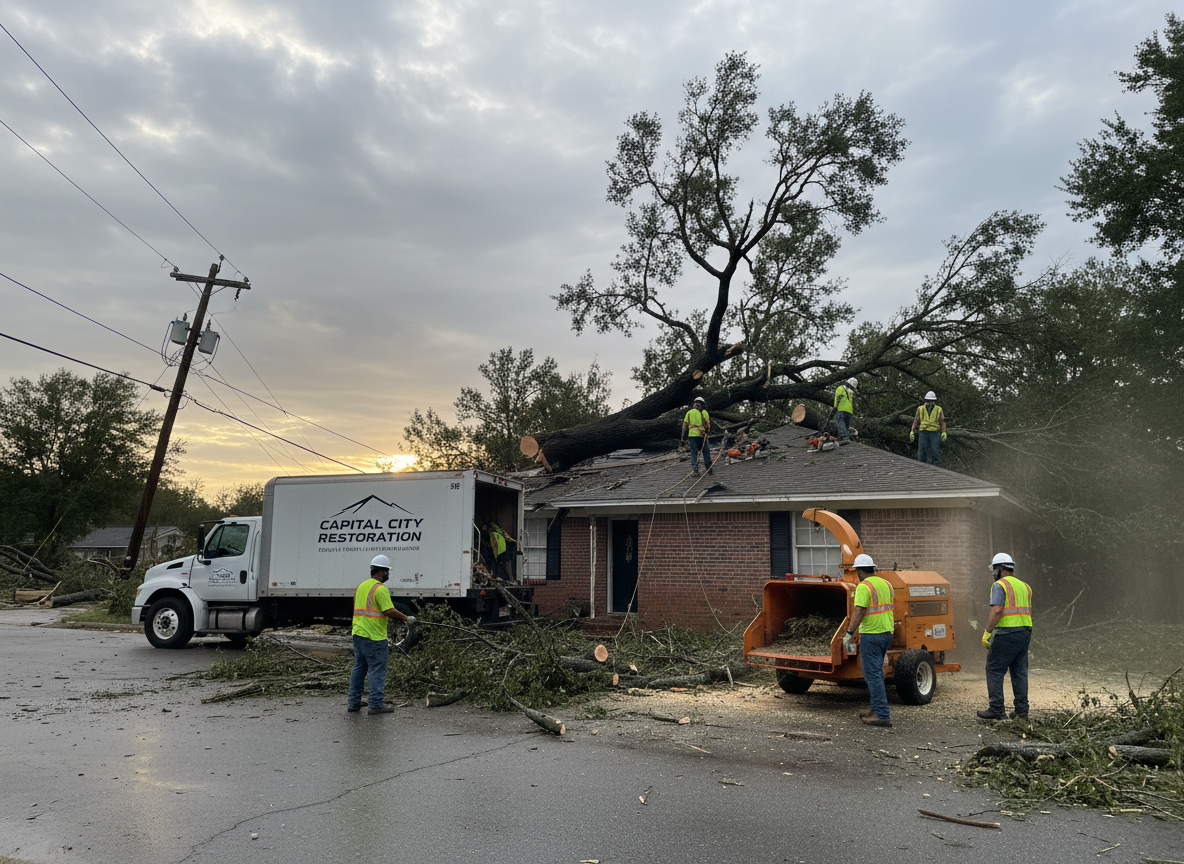
Tallahassee's humid subtropical weather brings sudden downpours and tropical storm remnants that push water into crawlspaces and attics faster than in drier regions. Homes built before 1980 in Midtown and Downtown often have balloon framing and plaster walls that trap moisture behind finishes, requiring moisture meters and targeted demolition rather than surface drying alone. After a storm passes, daytime humidity above 70 percent slows natural evaporation, so industrial dehumidifiers must run longer to reach the 40 percent target needed to stop secondary mold growth in Leon County.
Wind-driven rain frequently breaches roof valleys and window seals on brick homes in Killearn Estates and Southwood, sending water along rafters into insulation. Technicians check for hidden saturation in cellulose batts and remove it before it collapses ceilings. Near Florida State University and College Town, rental properties with shared walls mean one unit's leak can affect neighbors, requiring coordinated access and documentation to satisfy property managers. Clay-heavy soils around the Florida State Capitol area hold water against foundations for days, so exterior grading checks are part of every job to prevent repeat intrusion.
St. Marks National Wildlife Refuge storms can send surge or heavy runoff toward southern Leon County edges, while Panama City and Valdosta weather systems sometimes track inland and drop additional inches on already saturated ground. In these events, crews stage equipment at multiple sites because power outages last longer than in coastal counties, extending drying times. Documentation of pre-existing wear versus storm damage protects homeowners when insurance adjusters review claims from older neighborhoods.
Technician insight
In Tallahassee the thing that catches most people out with Storm Damage Restoration is how quickly hidden moisture in plaster walls turns into mold when the air stays above 65 percent humidity for days after a storm. Older homes in Midtown and around Florida State University have multiple layers of paint and wallpaper that trap water, so you have to open more wall than the homeowner expects. Clay soils around Killearn Estates keep foundations wet long after the rain stops, which changes how long the drying phase actually runs.
Heavy Rain Intrusion in Southwood
A Southwood residence took water through a compromised roof valley during a late-summer storm. Inspection showed saturation in attic insulation and along second-floor ceilings. Crews extracted water, removed wet cellulose, and ran drying equipment for six days until readings stabilized. The homeowner avoided mold growth and full ceiling replacement.
Storm Damage Restoration Services We Offer
✓Emergency Water Extraction
Rapid removal of standing water from living spaces and crawlspaces using truck-mounted pumps sized for Tallahassee rainfall rates.
✓Structural Drying After Storms
Placement of air movers and dehumidifiers calibrated for local humidity levels to dry framing and subfloors without warping.
✓Wind Damage Board-Up
Temporary securing of broken windows and doors on homes in College Town and Midtown to prevent further rain entry.
✓Roof Leak Containment
Tarping and interior water diversion on damaged roofs common after subtropical storm cells pass over Killearn Estates.
✓Crawlspace Moisture Remediation
Vapor barrier inspection and drying in older Southwood homes where clay soils keep moisture against foundations for weeks.
Storm Damage Restoration Cost in Florida
| Service | Typical Range | What Affects It |
|---|---|---|
| Water Extraction | $250–$750 | Varies with depth and access in crawlspaces common in Midtown homes. |
| Drying Equipment Package | $150–$400 per day | Longer runtimes needed during humid summer months after storms. |
| Board-Up Service | $300–$600 | Depends on number of openings and material type on older Downtown properties. |
| Crawlspace Drying | $400–$900 | Higher when clay soil retains moisture against foundations. |
Ranges are typical for Florida and confirmed with an exact written quote before any work starts.
How it works
- 1
On-Site Assessment
Technician inspects affected rooms, attics, and crawlspaces using moisture meters and thermal imaging while documenting storm-related damage in Leon County homes.
- 2
Water Removal
Extraction of standing water from floors and voids, followed by removal of saturated insulation and drywall sections that cannot be saved.
- 3
Drying and Monitoring
Equipment setup with daily moisture readings until materials reach acceptable levels, accounting for Tallahassee's persistent summer humidity.
- 4
Restoration and Final Check
Replacement of removed materials and verification that hidden moisture behind walls has been eliminated before homeowners return.
Pricing
Pricing based on square footage affected, number of rooms, and equipment runtime required after inspection.